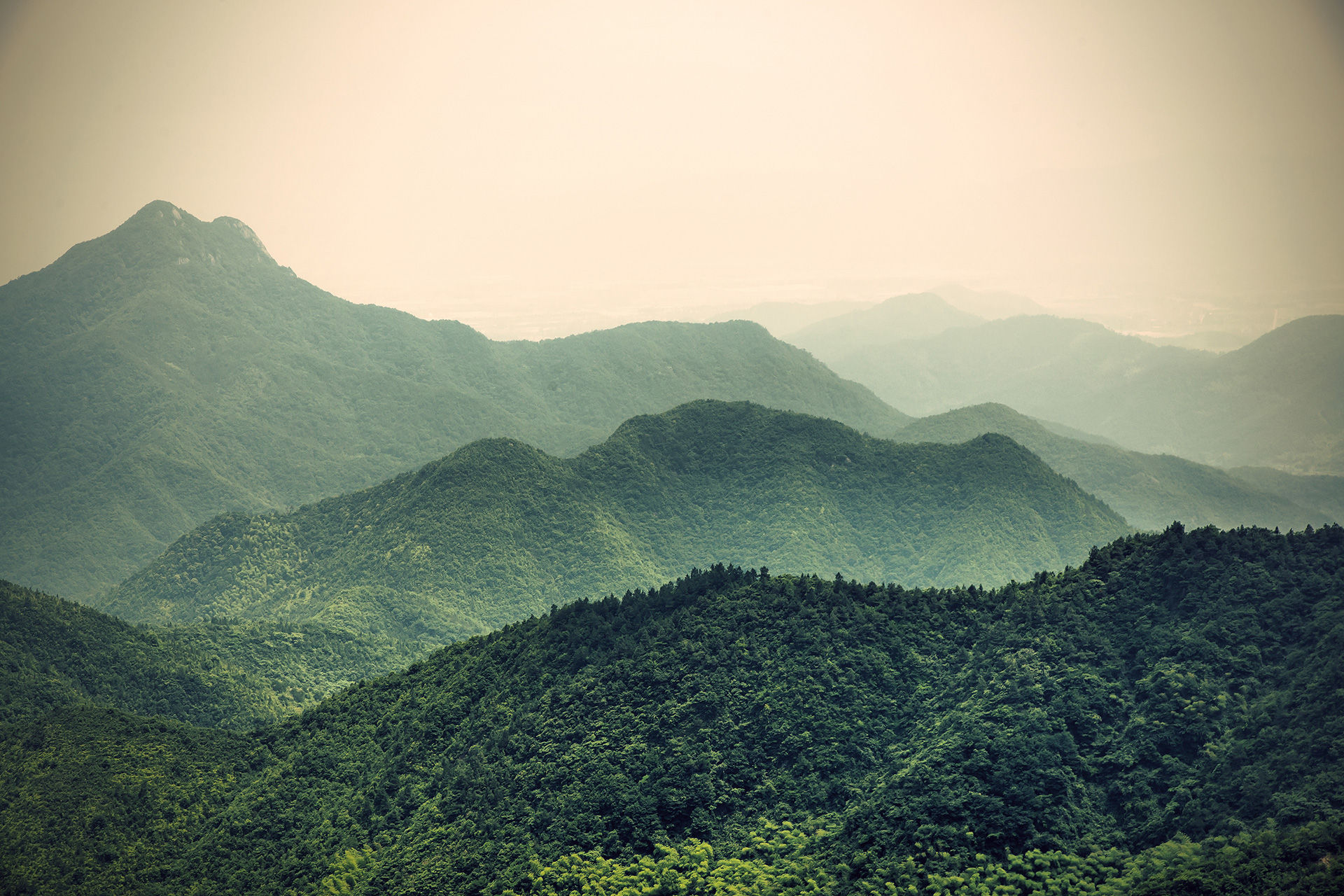

The Non-Ordinary – Part VII: Connecting With Place – Mountain


Standing at the bus stop, downcast and forlorn, I saw his approach out the corner of my eye, the bold strides of a prophet. His piercing gaze demanded to be acknowledged. “Do you know what it is you are looking at…do you know?” he asked, pointing to a mountain peak in the distance. “No,” I replied. “It is Mont Jolie, the Beautiful Mountain – this is what you are seeing!”
At that moment, preparing to leave Chamonix, I didn’t feel that any mountain could be beautiful, having just seen months of training go down the drain and the dream of completing the Tour du Mont Blanc dashed to pieces. Mountains are notorious for breaking people, body and spirit, as many iconic mountain peaks attest to. And I had been broken.
The wrestling match against the formidable Mont Blanc trek rendered me down and out. I couldn’t muscle my way through. All the training, all the preparation, all the passion could not gain command over my failing body. Having collapsed three times on the trail, unable to control my flailing arms, I disintegrated into a sobbing heap and had to be transported into town. Maybe it was the altitude.
It was a slow-learn for me, eventually burned into my soul, the lesson of loss, disappoint and failure, the beauty of its enlightenment, a treasure wrapped in darkness. Descent is the unexpected pathway to ascent.
For me, the remembrance of Mont Jolie has become a core component of meditation. Understanding that mountains have been formed by the cataclysmic colliding of plates beneath the earth’s surface, or by the forceful eruption of volcanic material emanating from hotspots under the ocean’s floor, I’m reminded that what seems to be chaos, is many times a creative act of rearranging, radical but also beautiful. The things that I may perceive as chaos, failure, disappointment or loss may be the stirrings of something vital that has long dwelt under the surface and is now erupting into full expression of being.
Robert Hass begins his introduction to The Ecopoetry Anthology edited by Anne Fisher-Wirth and Laura-Gray Street by making his case for the intersection between ecology and poetry. He uses Gary Snyder’s poem “Burning the Small Dead” as a case in point. Referring to this work as a “dance-like movement of accentual verse” he notes that this poem was written in the Sierra Nevada in the 1950’s.
This was a time when our perception was shifting about the meaning of our existence. We were beginning to come to a new understanding of our place in time and space. According to Hass, Charles Lyell’s Principles of Geology in 1830 opened a door acknowledging that the earth is far older than we previously thought and was forged by natural forces the kind of which we had previously not considered. His work may have encouraged John Muir’s study of glaciers in the Sierra Nevada as well as opened a door for the work of Charles Darwin.
The important point here is that Gary Snyder’s poem seems to fold these ingredients together into a distilled expression and sense of wonder. Snyder describes “black rock” and “windy fire.” Hass deftly ties these things together pointing out that geologists now believe that the Sierra Nevada “began to form into a single massive block about 80 million years ago” and that “the universe itself is about 15 billion years old, born apparently of a violent and explosive event” expanding at incredible speed. Hass describes this as a “windy fire indeed.”
To stand on ancient rock, to sense our origins is a sacred act and in that place we become “sanctified,” we become set apart. Many times this experience can set us into purposeful motion. Every mountain has the potential for this transformative effect. Every mountain has the potential for the “holy.”
Have you experienced “the windy fire?”
Writing Prompt for the Week: Chaos
Comments